Research Catalog
The value of James Joyce
- Title
- The value of James Joyce / Margot Norris (University of California, Irvine).
- Author
- Norris, Margot
- Publication
- New York : Cambridge University Press, 2016.
- Supplementary Content
- Cover image
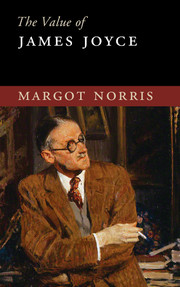
Items in the Library & Off-site
Filter by
1 Item
| Status | Format | Access | Call Number | Item Location |
|---|---|---|---|---|
Available - Can be used on site. Please visit New York Public Library - Schwarzman Building to submit a request in person. | Book/text | Use in library | JFD 16-4428 | Schwarzman Building - Main Reading Room 315 |
Details
- Subject
- Bibliography (note)
- Includes bibliographical references (pages 131-153) and index.
- Contents
- 1. Introduction: Democratic and Cosmopolitan Joyce -- 2. The significance of the ordinary : in Dubliners, Portrait, and Ulysses -- 3. Irish Nature, Irish City: The complexities of place; 4. Joyce's Cultures, and Classical and the Popular -- 5.The Styles of Ulysses, and Finnegans Wake: Moods, voices, and language.
- Call Number
- JFD 16-4428
- ISBN
- 9781107131927
- 1107131928
- 9781107583160
- 1107583160
- LCCN
- 2015041400
- 40026189428
- OCLC
- 947073486
- Author
- Norris, Margot, author.
- Title
- The value of James Joyce / Margot Norris (University of California, Irvine).
- Publisher
- New York : Cambridge University Press, 2016.
- Description
- 157 pages ; 22 cm
- Type of Content
- text
- Type of Medium
- unmediated
- Type of Carrier
- volume
- Bibliography
- Includes bibliographical references (pages 131-153) and index.
- Summary
- "Margot Norris' The Value of James Joyce explores the writings of James Joyce from his early poetry and short stories to his final avant-garde work, Finnegans Wake. His works include some of the most difficult and challenging texts in the English literary canon without diminishing his impressive popularity beyond the scope of academia. A democratic impulse may be counted as an important feature of this paradox: that Joyce's stylistic and linguistic experiments never lose their focus on a world of characters whose everyday activities comprise the stories of life in Ireland in the late nineteenth and early twentieth century, even as some of the most famous texts are given structures derived from Ancient Greek literature. The Value of James Joyce examines not only the significance of the ostensibly ordinary but the function of natural and urban spaces, classical and popular culture, and the moods, voice, and language that give Joyce's works their widespread appeal"-- Provided by publisher."Richard Ellmann said it best: "Joyce's discovery, so humanistic that he would have been embarrassed to disclose it out of context, was that the ordinary is the extraordinary." How so? Is there anything extraordinary about depicting a man going to the outhouse in the morning and defecating, pleased to find "that slight constipation of yesterday quite gone" (4.508)? Surely the act is commonplace enough, but its depiction in a 1904 novel, complete with the quiet thoughts that accompany it, is not. It suggests that even the most insignificant moments of a day can have meaning to human beings, and their representation in literature sharpens its realism to an extraordinary degree. In a 1920 letter to Carlo Linati, Joyce called Ulysses "the cycle of the human body as well as a little story of a day (life)." The representation of the ordinary thereby becomes one of the most important elements of Joyce's democratic impulse"-- Provided by publisher.
- Connect to:
- Other Standard Identifier
- 40026189428
- Research Call Number
- JFD 16-4428